
A zero drillpipe pressure reading after shut-in can look reassuring.
It may not be.
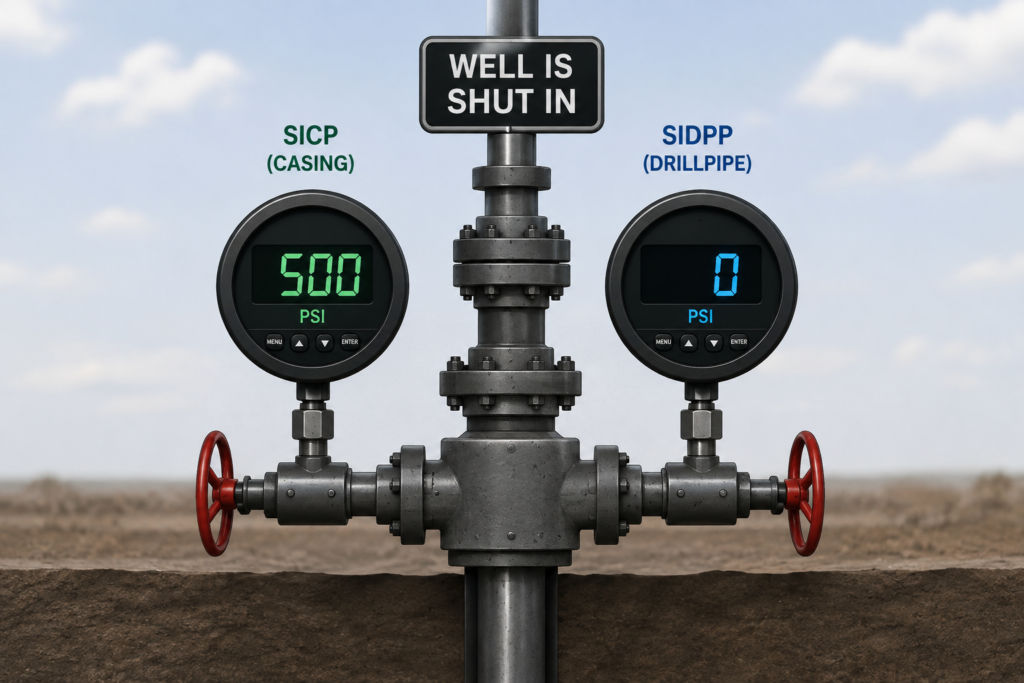
When a non-ported drillstring float is installed, the float can prevent pressure below it from reaching the drillpipe pressure gauge at surface. The gauge may show 0 psi even though pressure exists below the float.
Before you calculate the kill sheet, make sure your first pressure input is valid.
This guide keeps the main point simple.
A zero drillpipe pressure reading after shut-in can be misleading when a float is installed. Before you calculate the kill sheet, make sure your first pressure input is valid.
You will also see why that verified SIDPP matters in the Understanding Beats Memorizing kill sheets series. It is the first critical input for kill-weight mud calculations and later kill sheet calculation steps.
Always follow your approved company, instructor, and equipment procedures. Use the Bumping a Float Properly course for the full procedure.
Why SIDPP May Read Zero
Shut-in drillpipe pressure, or SIDPP, is the pressure measured on the drillpipe after the well is shut in and pressures have stabilized.
Normally, pressure from below the surface equipment can communicate through the drillstring and reach the drillpipe pressure gauge.
A drillstring float changes that path.
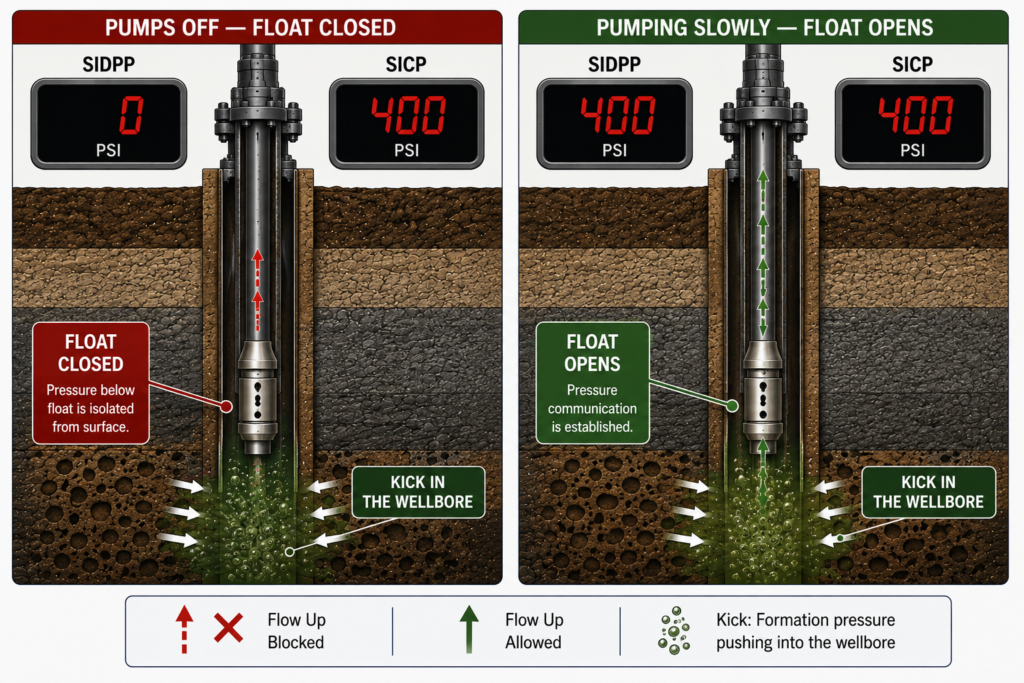
A float generally allows fluid to be pumped down the drillstring. It restricts flow in the opposite direction. When the pumps stop, the float closes.
If pressure below the float is higher than pressure above it, the closed float can isolate that pressure from the surface gauge. The drillpipe gauge may then show zero or another reading that does not represent the true SIDPP.
So, do not automatically treat a zero reading as a balanced well.
This is the key lesson behind the follow-up topic, “A zero SIDPP reading, is the well really balanced?” The answer depends on the equipment and the pressure path.
Understand The Risk
Think of the float as a one-way valve in the drillstring.
With the well shut in, pressure may exist below the float while the drillpipe gauge at surface still shows 0 psi. That is why a zero reading does not automatically mean the well is balanced.
This matters in drilling well control training, well control principles for drillers, and real field decisions.
Check The SIDPP First
Do not build the kill sheet from an unverified drillpipe reading.
First, confirm whether the float is blocking pressure communication. Then obtain the correct SIDPP using your approved company, instructor, and equipment procedure.
Want the full sequence?
Use the Bumping a Float Properly course. It walks you through the full procedure without turning this article into a step-by-step lesson.
Keep The Kill Sheet In View
Verified SIDPP is the first critical pressure input for kill-weight mud calculations.
That is the bridge to the Understanding Beats Memorizing kill sheets series. If your first number is wrong, later kill sheet calculation steps can be wrong too. That affects well control formulas, pressure schedules, and decisions made during the kill.
SIDPP Is Not ICP
Keep this distinction short and clear.
SIDPP is the shut-in drillpipe pressure you verify first. ICP is a later circulating pressure value. They are related, but they are not the same number.
Do not substitute one for the other. In well control online course work, iadc wellsharp preparation, and well control exam practice questions, that mix-up causes problems fast.
Follow Approved Procedure
Use your approved company, instructor, and equipment procedures every time.
If you are doing well control calculations practice, wellsharp supervisor level test prep, or working through an iadc wellsharp driller level study guide, do not guess at the pressure input. Verify it first. Then move into the well control formulas that follow.
Next Step
Check the Bumping a Float Properly course for the full procedure.
Then build the kill sheet from verified inputs.
That is a practical habit for drilling well control training, kill sheet calculation steps, and stronger well control principles for drillers.
Before you calculate the kill sheet, make sure your first pressure input is valid.
Keywords covered naturally in this topic include iadc wellsharp preparation, well control calculations practice, drilling well control training, well control formulas, wellsharp supervisor level test prep, well control online course, kill sheet calculation steps, well control principles for drillers, iadc wellsharp driller level study guide, and well control exam practice questions.